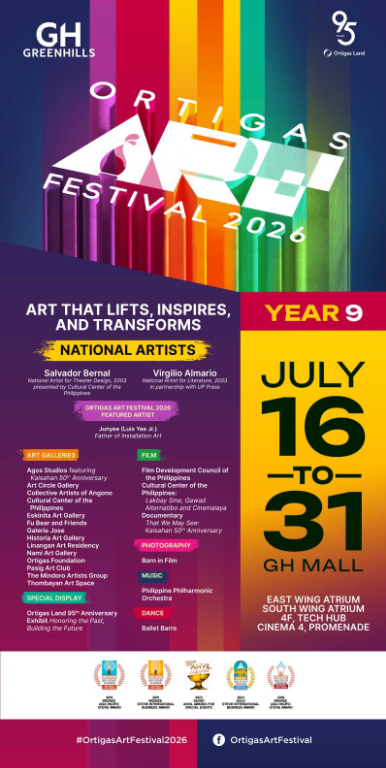
THE intersection of community and culture takes center stage as the 9th Ortigas Art Festival transforms GH Mall into a vibrant, multidisciplinary hub of creativity.
Running from July 17 to 30, 2026, the annual event dismantles the traditional, often intimidating barriers of elite gallery spaces, offering the public free access to contemporary art exhibitions, independent film screenings, live performances, and interactive workshops.
This year’s theme, “Elevate,” highlights the festival’s steady evolution from a modest painting exhibition into one of Metro Manila’s most accessible and award-winning cultural celebrations.
Driven by its long-running advocacy of “Art for All,” the event delivers a multi-sensory experience that embeds compelling visual art and moving performances directly into the everyday mall-going routine.
Honoring Cultural Icons
A central highlight of the 2026 lineup is a pair of exhibitions dedicated to two of the country’s most influential cultural figures.
The festival features a tribute to National Artist for Literature Virgilio Almario, organized in collaboration with the University of the Philippines (UP) Press.
Parallel to this, the enduring legacy of National Artist for Theater Design Salvador Bernal comes alive through a partnership with the Cultural Center of the Philippines (CCP).
“The theme ‘Elevate’ is both a reflection and a call to action,” says Renato “Ato” Habulan, Lead Curator of the Ortigas Art Festival. “It honors how far the festival has come over nine years, while challenging artists and audiences alike to rise higher, think deeper, and experience art in new and unexpected ways right here in their neighborhood mall.”
This year’s featured artist is environmental sculptor Junyee, widely regarded as the “Father of Philippine Installation Art.”
Renowned for utilizing organic materials to construct monumental, site-specific installations, Junyee’s work epitomizes the spirit of artistic innovation that defines the festival.
The expansive gallery layout includes contributions from major spaces and artist collectives, including Agos Studio—marking the 50th anniversary of the social realist group Kaisahan—Eskinita Art Gallery, Linangan Art Residency, Pasig Art Club, and the Collective Artists of Angono.
Additionally, a photography exhibit by Born in Film offers a nostalgic yet modern lens on diverse Philippine landscapes.
Cinema and Movement
Beyond static displays, the festival incorporates motion and sound. The opening ceremony set a vibrant tone with live performances by the prestigious Philippine Philharmonic Orchestra Quartet alongside dynamic dance showcases.
Cinema also takes on an elevated role through partnerships with the Film Development Council of the Philippines (FDCP) and the CCP. The festival’s cinematic program features nightly screenings at Cinema 4, Ortigas Cinemas Promenade, highlighting powerful features and independent shorts.
The lineup includes nightly screenings of Cinemartrys, and Alipato at Muog, alongside selections from CCP’s Lakbay Sine, Gawad Alternatibo, and Cinemalaya programs.
The documentary That We May See, directed by Paul Morales, revisits the story of Kaisahan on its 50th anniversary, while works by acclaimed filmmaker Sari Dalena add another layer to the cinematic lineup.
Alongside these are the short films like I’m The Best Left Inside My Head by Elian Idoma (2025) and Pastil: Parehas Ra Ta’g Kan-on’g Ginakaon by Andrei Francis “Franky” C. Arrocena (2025)
Empowering the Community
The festival actively encourages patrons to shift from passive viewers to active creators. A series of free community workshops offers hands-on education in acrylic pouring, block printing, textured plaster art, and copyright masterclasses.
Looking toward the future, the festival has introduced the inaugural Ortigas Art Grant. This artist development initiative supports participating talent beyond the 2026 exhibition cycle.
Shortlisted artists will present new works next year, with the final grantee receiving an international exposure opportunity tied to Art Basel Hong Kong 2027 during the festival’s landmark 10th anniversary.
Ultimately, the festival’s greatest triumph remains its democratic approach, ensuring that families, students, and seasoned collectors alike can seamlessly encounter exceptional Filipino talent just around the corner of their neighborhood mall.