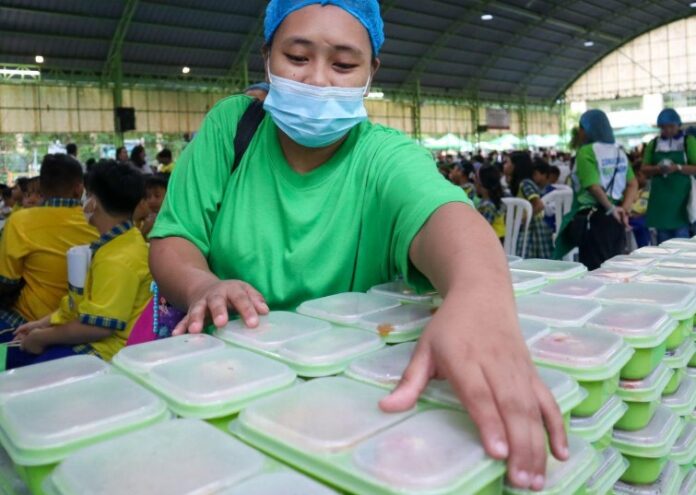
THE Department of Education (DepEd) is taking steps to curb local food waste while boosting student nutrition by integrating surplus farm produce into its expanded School-Based Feeding Program (SBFP).
Education Secretary Sonny Angara announced the initiative to address the seasonal spoilage of fresh vegetables—a problem that worsens during the rainy season when transportation delays and limited storage options leave farmers struggling to bring crops to market.
“Gusto nating makatulong sa ating mga magsasaka habang sinisiguro na may masustansya at mainit na pagkain sa ating mga paaralan para sa ating mga learners,” Secretary Angara said.
The feeding program now covers 4.6 million beneficiaries nationwide, including all Kindergarten and Grade 1 learners.
Under the proposed strategy, suitable surplus vegetables will be channeled directly to schools to supply hot, nutritious meals, provided they meet food safety and program standards.
To support the effort, DepEd is encouraging private sector involvement through the Adopt-a-School Program.
Companies, organizations, and individuals can purchase produce directly from local farmers and donate it to participating schools.
In return, qualifying private partners can apply for a 150% tax deduction under the Adopt-a-School Act.
DepEd is also exploring a partnership with the Department of Agriculture (DA) to utilize existing cold storage facilities.
Proper refrigeration will help preserve suitable produce during severe weather, bridging the gap between harvest and school delivery.
Additionally, the agency is operationalizing Republic Act 11321, or the Sagip Saka Act.
This legislation enables Schools Division Offices (SDOs) and individual schools to engage in negotiated procurement—bypassing lengthy public bidding procedures—to source fresh produce directly from local agricultural and fishery enterprises.
To prepare field personnel for these changes, DepEd, in coordination with the DA and the Sagip Saka Secretariat, is holding capacity-building workshops focused on direct-procurement guidelines.
“Our broader direction towards hot meals for our learners will empower our local farmers and fisherfolk through the Sagip Saka mechanism,” Angara added. “Our goal is simple: help our farmers, reduce food waste, and turn good vegetables into nutritious, hot meals for our learners.”