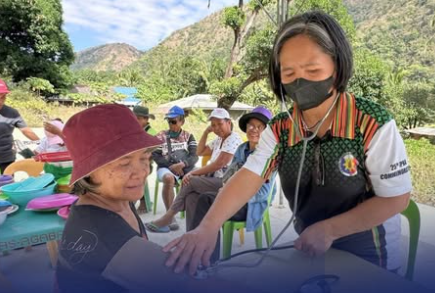
THE Department of Budget and Management (DBM) has authorized the release of ₱27.410 billion to support indigent and financially incapacitated Filipinos facing healthcare costs, including hospitalization, prescription medicines, emergency treatments, and professional fees.
The allocated funds will sustain the Department of Health’s (DOH) Medical Assistance to Indigent and Financially Incapacitated Patients (MAIFIP) Program.
Sourced from the FY 2026 General Appropriations Act under the DOH Regular Budget, the release targets public health institutions, specialty centers, and local government partners across the country.
Budget Secretary Kim Robert C. De Leon emphasized that the capital release aims to deliver immediate, tangible relief to patients burdened by critical care costs.
“The ₱27.4 billion we are releasing is meant to translate into real help at the hospital level—medicines that can be bought, procedures that can be performed, and medical bills that families do not have to shoulder on their own,” Secretary De Leon noted.
A breakdown of the funding distribution includes:
- Centers for Health Development (CHDs): ₱19.145 billion to expand coverage through local government hospitals, private health institutions, and regional facilities.
- DOH Hospitals: ₱4.353 billion dedicated to state-run hospitals in Metro Manila and key regional centers.
- GOCC Specialty Hospitals: ₱2.910 billion allocated to facilities such as the Lung Center of the Philippines, National Kidney and Transplant Institute, Philippine Children’s Medical Center, and Philippine Heart Center.
- UP-Philippine General Hospital: ₱950 million to bolster operations at the nation’s premier public hospital.
- Drug Abuse Treatment Centers: ₱52 million designated for specialized rehabilitation programs.
Secretary De Leon highlighted that distributing the majority of the funds via regional CHDs ensures that medical aid reaches rural and underserved communities rather than remaining concentrated in urban centers.
To streamline access, the release also supports the integration of eMAIFIP into the eGovPH superapp, following Presidential Directive No. PBBM-2026-1881-1886.
The digital transition aims to eliminate cumbersome paper-based procedures, making government financial assistance faster and more accessible to vulnerable families during health crises.