





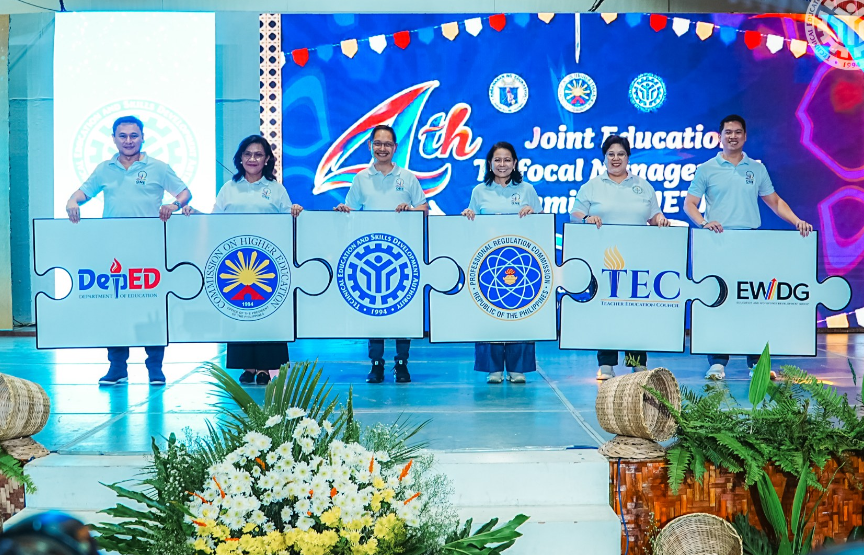
THE Department of Education (DepEd), Commission on Higher Education (CHED), and Technical Education and Skills Development Authority (TESDA) have rolled out major collaborative initiatives under the “One Education” framework.
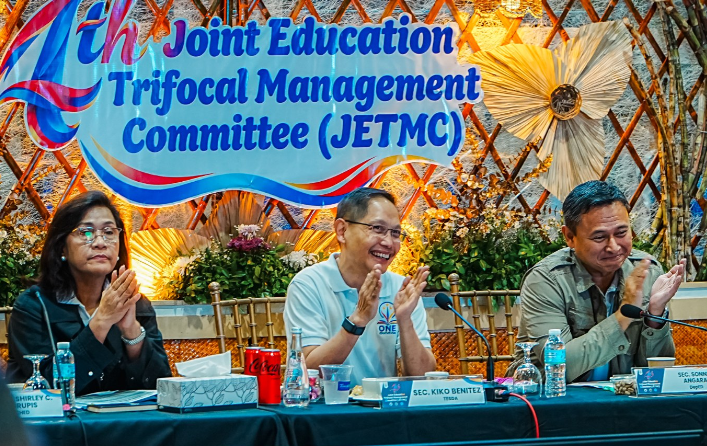
Aimed at bolstering learner support and bridging the gap between schooling and employment, the programs were formally introduced during the Fourth Joint Education Trifocal Management Committee (JETMC4) Meeting here.
At the core of these reforms are three key systems: the LINGAP Program, the LAPIT Index, and the Integrated Ladderized Education-to-Employment Pathways (ILEEP).
The Learning Initiatives for Nurturing Guidance Associates and Counselors (LINGAP) Program addresses the growing need for mental health professionals in schools.
For Academic Year 2026–2027, the government allocated ₱182.055 million for 870 scholarship slots, supporting DepEd personnel pursuing graduate studies in guidance and counseling.
During the meeting, nine pioneering scholars from the Negros Island Region were formally recognized.
“Importanteng masigurado na ang mga mag-aaral ay may access sa mental health professionals,” said Education Secretary Sonny Angara, emphasizing that LINGAP strengthens both personnel development and student support systems.

CHED Chairperson Dr. Shirley Agrupis echoed this, noting that higher education plays a pivotal role in equipping qualified professionals to address student challenges.
To map out educational deficiencies, the agencies launched the Localized Access Pathways and Institutional Transitions (LAPIT) Index.
Integrated with Project TAHANAN, the index evaluates proximity, diversity, capacity, and maturity to track learner transitions and identify geographic gaps across senior high schools, technical-vocational institutions, and universities.
Meanwhile, ILEEP provides flexible, ladderized options outside the traditional four-year college track.
Led by the Education and Workforce Development Group, the system connects schools with industry partners in priority sectors like digital technology, healthcare, and tourism.
It allows students to gain immediate employment while retaining credits for future academic or technical advancement.
TESDA Secretary Kiko Benitez stressed that programs like ILEEP turn the “Training to Trabaho” vision into a reality, ensuring Filipinos have multiple, seamless routes toward successful careers.