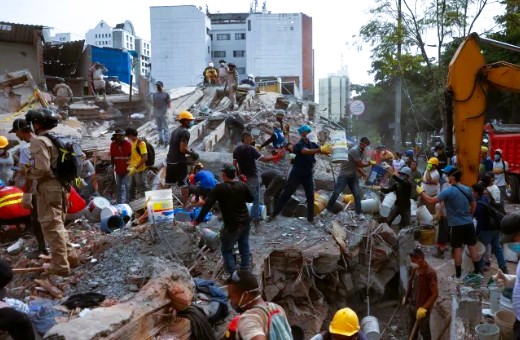

SEARCH and rescue teams in western Colombia are in a desperate race against the clock as the critical 48-to-72-hour window for finding earthquake survivors rapidly closes.
Picking through pulverized rubble overnight in the hardest-hit cities—Cali, Pereira, Manizales, and Quibdo—emergency crews continue to hunt for signs of life following a devastating magnitude 7.4 earthquake that struck the region.
The disaster presents an early, formidable test for newly elected President Abelardo de la Espriella. Official government estimates report at least 181 deaths and nearly 2,600 injuries.
However, stark discrepancies h ave emerged regarding those unaccounted for: while President de la Espriella placed the missing count at 195, civilian-maintained databases estimate the true figure could be closer to 4,000.

Despite the overwhelming destruction, moments of hope have sustained rescue efforts. Crews successfully pulled a dust-covered infant through a narrow crack in a collapsed concrete wall, and onlookers cheered as workers extricated an injured woman onto a stretcher.
Yet, relief efforts face immense hurdles in a country already battered by deep-seated poverty and decades of armed conflict that have displaced millions.
Norwegian Refugee Council director Giovanni Rizzo warned that the quake dramatically compounds an already severe humanitarian crisis across the region.
Paradoxically, ongoing peace mechanisms from Colombia’s 2016 accord with rebel groups may accelerate emergency distribution.
U.N. Resident Coordinator María José Torres noted that international aid organizations were already established in conflict-prone areas—such as the epicenter in Chocó—allowing teams to deploy resources immediately.
An international relief effort is now mobilizing rapidly to support Colombia’s overburdened civil response.
The United States has pledged over $15 million in emergency assistance, while Mexico is preparing to send technical search units, medical personnel, and tons of health supplies.
Additionally, Salvadoran President Nayib Bukele announced that El Salvador will dispatch two aircraft carrying 100 tons of supplies, offering prayers for the victims and the Colombian people as rescue operations continue around the clock.