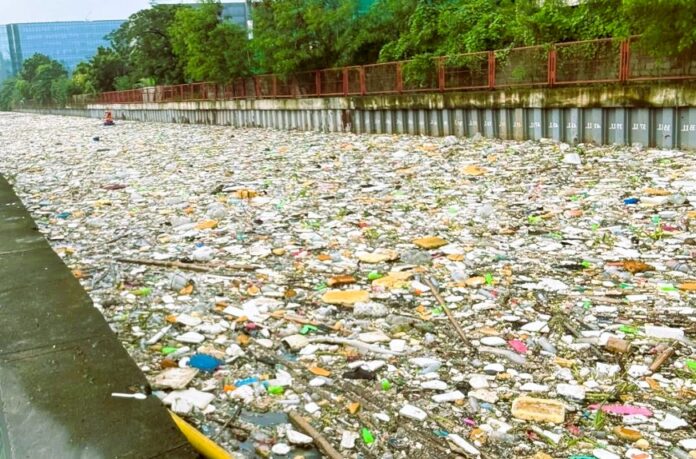

FOLLOWING days of heavy rains that left major urban channels submerged in floating refuse, Department of Public Works and Highways (DPWH) Secretary Vince Dizon has officially declared a “garbage crisis,” urging national leaders to establish a comprehensive, long-term master plan to address the country’s worsening waste management challenges.
The declaration comes in the wake of a massive waste buildup along the Redemptorist waterway in Parañaque City, a vital drainage route leading into Manila Bay.
Inspections revealed that high tides and heavy rains carried an estimated 400 metric tons of trash into the channel overnight.
Local officials noted that while waste management has been a decades-long struggle across Metro Manila, the sheer volume of trash clogging this specific drainage channel is unprecedented.
To clear the waterway and prevent widespread flooding across Parañaque and surrounding cities, the DPWH, the Metropolitan Manila Development Authority (MMDA), and local government units mobilized heavy machinery, specialized trash skimmers, and emergency employment crews.
However, officials emphasize that emergency cleanups are merely temporary band-aids for a structural dilemma.

DPWH Undersecretary Charles Kalima, who is overseeing field cleanup operations, highlighted the repetitive nature of the task, noting that clearing an estero or drainage canal one day often yields the exact same volume of waste the next.
Secretary Dizon warned that continuing this cycle of reactive maintenance is financially and operationally unsustainable.
While appealing to the public and local government units for stricter waste disposal discipline, Dizon stressed that individual behavioral shifts alone cannot solve the systemic problem.
Dizon urged the implementation of drastic, modern measures within a overarching national master plan—including the exploration of trash-to-energy technologies—to handle municipal waste efficiently.
Without a decisive, long-term strategy, the DPWH warns that incoming typhoons and high tides will continue to push urban drainage systems beyond capacity, threatening millions of residents with recurring public health hazards and severe inundation.