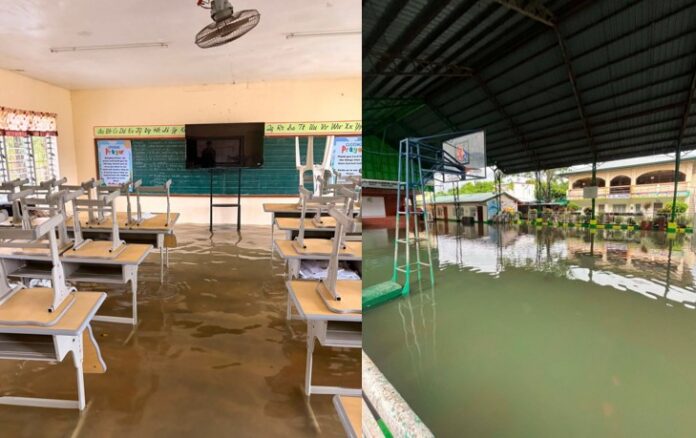
THE Department of Education (DepEd) has activated its emergency learning measures following heavy rains brought by the Southwest Monsoon (Habagat), which caused widespread class disruptions across Metro Manila and several neighboring provinces.
The activation aligns with Memorandum Circular No. 123 issued by the Office of the President, directing schools in affected regions to implement alternative learning modes unless local chief executives order otherwise.
To ensure student and teacher safety while maintaining educational continuity, DepEd instructed field offices to enforce its specialized Education in Emergencies framework, anchored by the 4H protocol: Hinto, Hinga, Hinay, and Hayo.
Education Secretary Sonny Angara emphasized that safety remains the top priority during extreme weather conditions, noting that academic responses must adapt to localized hazards.
“Kapag malakas ang ulan, baha ang daan, o may risk sa safety ng learners at teachers, hindi puwedeng one-size-fits-all ang decision,” Angara stated, explaining that the 4H framework guides schools on when to halt, slow down, pause, or resume operations.
The 4H Emergency Framework
- Hinto (Stop): Applied during unsafe conditions or high-risk situations. All academic activities stop temporarily to focus strictly on basic needs, disaster response, and safety.
- Hinga (Breathe): Implemented when communities require recovery from stress or displacement. Schools focus on psychosocial support and well-being checks without demanding regular academic submissions.
- Hinay (Slow Down): Utilized during manageable disruptions. Learning continues through flexible synchronous or asynchronous modes tailored to available resources and connectivity.
- Hayo (Go): Activated when normal conditions return and regular, in-person instruction can safely resume.
DepEd clarified that current shifts to online or asynchronous modules under the Habagat rains fall under the Hinay classification, provided students and teachers remain safe and academic demands are adjusted.
Schools have been directed to update their Learning and Service Continuity Plans, maintain open communication lines with parents, and keep academic expectations reasonable.
Regional and division offices will continuously provide technical support to schools affected by flooding, landslides, and heavy rainfall.