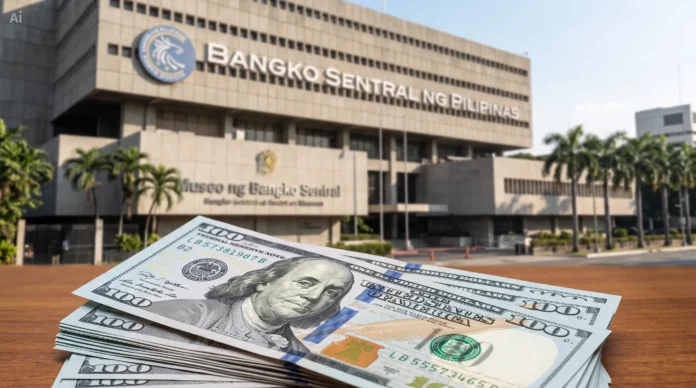


PH foreign reserves ease to $103.4 billion in july, maintaining strong financial shield
THE Philippines’ gross international reserves (GIR) dipped to US$103.4 billion at the end of July 2026, down from US$104.8 billion recorded in June, according to official data released by the Bangko Sentral ng Pilipinas (BSP).
Despite the month-on-month decline, central bank officials reassured that the country continues to hold a comfortable external financial cushion, remaining well-positioned to meet foreign obligations and absorb volatility in global financial markets.
The BSP attributed the dip primarily to three main factors: its own net foreign exchange operations, drawdowns by the National Government (NG) on its central bank deposits to service external debt, and other net foreign currency withdrawals by the government.
However, these outflows were partially cushioned by gains in other areas of the central bank’s balance sheet.
Upward valuation adjustments in the BSP’s gold holdings—driven by rising international gold prices—alongside steady net income generated from foreign investments helped limit further erosion of the reserves.
Foreign exchange reserves serve as a vital measure of a nation’s macroeconomic health.
A robust buffer provides central bankers with flexibility to stabilize currency swings while signaling strong creditworthiness to global markets.
By international standards, the July reserve level reflects exceptional liquidity and stability.
The BSP confirmed that the current GIR is sufficient to cover up to 6.7 months’ worth of imports of goods as well as payments for services and primary income.
Conventional guidelines typically consider three months of import cover as adequate, putting the country’s current reserve position well above safety thresholds.
Additionally, the reserve stock stands at approximately 3.6 times the country’s short-term external debt based on residual maturity. This provides a substantial safeguard to settle short-term commitments as they fall due over the coming months.
With over US$100 billion in reserve assets intact, the Philippines maintains a solid financial buffer to navigate broader economic headwinds, market uncertainties, and shifting dynamics across emerging economies.