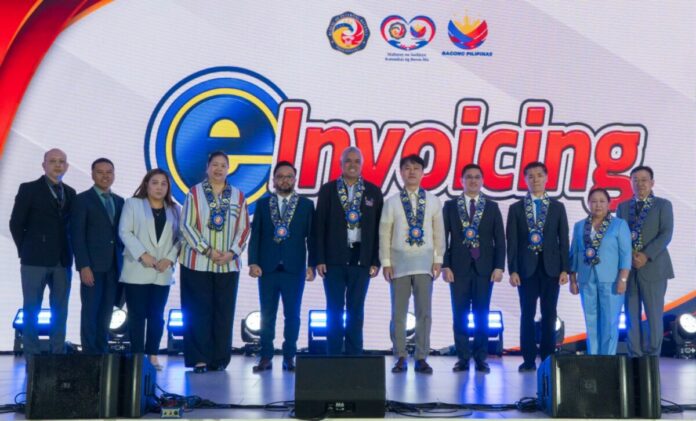


THE Bureau of Internal Revenue (BIR) and the Korea International Cooperation Agency (KOICA) officially marked the completion of the Electronic Invoicing and Sales Reporting System (EIS) Post-Management Support Project on July 7, 2026.
The upgraded tax platform was formally handed over to the Philippine government during a transition ceremony at the BIR National Office, signaling a major step forward in the country’s tax modernization and digital transformation efforts.
The ceremony was spearheaded by BIR Commissioner Charlito Martin R. Mendoza, South Korean Ambassador to the Philippines Lee Sang-hwa, Department of Finance (DOF) Undersecretary Rolando T. Ligon, Jr., and KOICA Philippines Country Director Jung Youngsun.
The event concluded a 14-month technical assistance project implemented by KOICA through JNH Consulting Co., Ltd. The initiative focused on upgrading system functionalities, eliminating critical operational bottlenecks, and training BIR personnel to manage the infrastructure independently.
In a recorded message, Finance Secretary Frederick D. Go praised the initiative for making the local business climate more competitive.
“The EIS Post Management Support Project is proof of our steadfast commitment to modernizing our tax administration,” Go said. “By contributing to the development of our tax systems, doing business in the Philippines is becoming easier, more cost-efficient, and more predictable for all.”
While the foundational EIS framework was originally deployed in 2022, the newly completed post-management phase—which kicked off in May 2025—focused heavily on sustainability.
Commissioner Mendoza emphasized that the true success of the project lies in human capital. Under the bureau’s broader BIR DARES reform agenda, technological investments are tied closely to workforce development.
“Our teams are now fully equipped to sustain and maximize this system independently,” added DOF Undersecretary Ligon, expressing complete confidence in the BIR’s ability to build on these operational milestones.
According to KOICA Country Director Jung Youngsun, the enhanced system introduces practical upgrades to everyday tax administration. Notably, the system features automatic invoice matching and validation, which will drastically accelerate the Value-Added Tax (VAT) refund investigation process. The system also integrates seamlessly with the Internal Revenue Integrated System (IRIS), improving statistical reporting and accuracy.
Ambassador Lee Sang-hwa noted that the project fulfills commitments made during the Republic of Korea–Philippines Bilateral Summit in March 2026. He highlighted that a streamlined, digitized tax system directly addresses the operational and investment concerns of Korean firms doing business in the Philippines.
The turnover ceremony concluded with key representatives from the DOF, BIR, the South Korean Embassy, and JNH Consulting Co., Ltd. celebrating the partnership, which aims to balance aggressive revenue collection with a transparent, taxpayer-centric approach.