

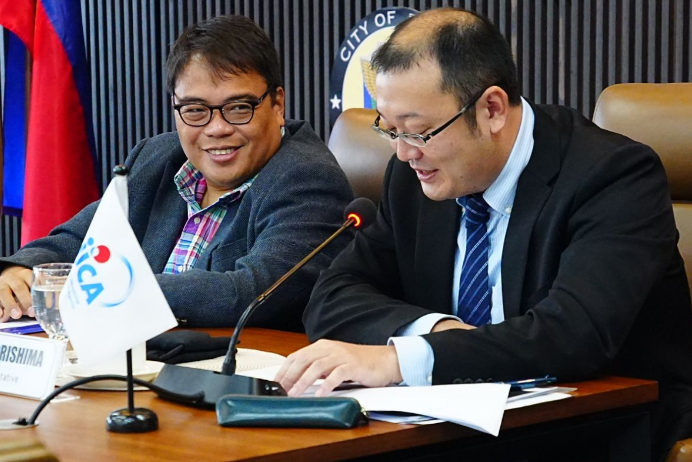


THE Metropolitan Manila Development Authority (MMDA), headed by Chairman Atty. Don Artes, convened the third Joint Coordination Committee (JCC) meeting for the Capacity Enhancement on Traffic Management with Improvement of Intelligent Transportation Systems for Metropolitan Manila (MMITS) project.
The gathering brought together representatives from Metro Manila’s 17 local government units (LGUs), national government agencies, and academia to review project milestones and outline technology-driven traffic strategies.
The MMITS project, a technical cooperation initiative between MMDA and the Japan International Cooperation Agency (JICA), forms part of the Five-Year Action Plan for Traffic Management 2023–2027.
During the meeting, Chairman Artes stressed the importance of expanding the agency’s capabilities in intelligent transportation systems (ITS) and data management.
“These capabilities will be critical in helping us respond to the evolving traffic challenges of the metropolis and in building a more integrated and data-driven traffic management system,” Artes stated.
JICA Senior Representative Takanori Morishima praised the multi-agency collaboration, emphasizing that enhanced urban connectivity supports sustainable economic growth across the Philippines.
The committee reviewed updates across three core project outputs:
- Short-Term Action Plan (Output 1): Finalization of project action plans and identification of specialized task forces tailored to MMDA’s operational priorities.
- Pilot Technology Implementations (Output 2): Progress on the Smart Pole Implementation Plan, which will test traffic and environmental sensors at selected intersections. Discussions also advanced on scaling “Lakbay Points,” a traffic management mobile application created by Cagayan State University students during the “Bagong Gawi, Bagong Galaw” app challenge.
- Traffic Data Integration (Output 3): Upgrades to Waze dashboards and the ongoing development of the Road DX System—an integrated platform combining data visualization and decision support—alongside the Traffic Signal Control Improvement Task Force.
Over the next six months, the project will focus on refining the overall ITS Development Plan, deploying the smart pole sensors, and collaborating with developers to promote Travel Demand Management (TDM).
Closing the session, MMDA Deputy Chairman Usec. Frisco San Juan, Jr. urged stakeholders to translate plans into action, ensuring pilot projects are effectively scaled and integrated into regular traffic management operations.


