THE Bureau of Internal Revenue (BIR) flagged 25 out of 65 gasoline stations inspected during the first three days of a major Fuel Marking enforcement drive across Luzon, signaling a tightened crackdown on illicit petroleum sales and tax evasion.
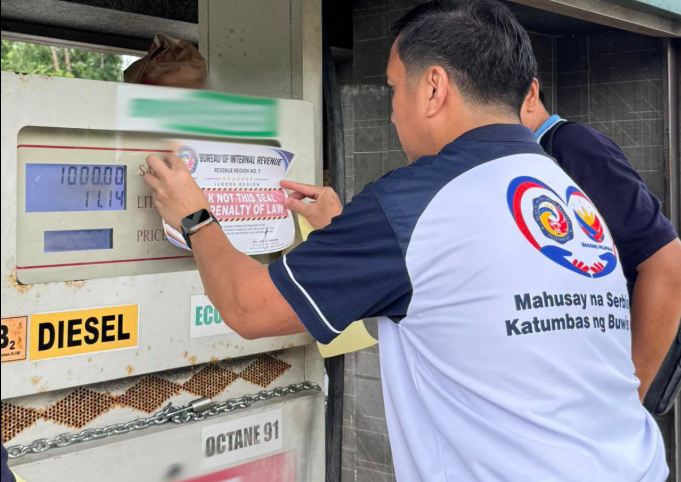
The operation, launched on August 17, 2026, resulted in officials inventorying affected fuel stocks and sealing or padlocking non-compliant dispensing pumps.
The BIR-led initiative is being conducted alongside the Bureau of Customs (BOC), with BIR Regional Directors personally supervising field operations while authorized service providers conduct technical fuel testing.
“We are making fuller use of Fuel Marking and our other enforcement tools to identify revenue leakages, act on them quickly, and protect compliant businesses from unfair competition in the petroleum sector,” said BIR Commissioner Charlito Martin R. Mendoza.
Fuel marking serves as a key mechanism to detect tax non-compliance in gasoline, diesel, and kerosene. Fuel samples that fail initial field tests undergo official inventorying and padlocking, followed by confirmatory lab testing.
If non-compliance is confirmed, the BIR assesses applicable tax liabilities, penalties, and interest charges before initiating formal collection or legal action.
Under standard rules, station operators may request corrective re-marking and the unsealing of pumps only after settling all outstanding tax obligations and meeting compliance guidelines.
The ongoing operation is paired with broader compliance measures, including physical inventory checks, registration audits, and Tax Compliance Verification Drive (TCVD) activities.
Although current operations focus on Luzon, the BIR plans to expand the initiative nationwide in the coming weeks.
“This is not a one-time operation. We will continue using Fuel Marking and our other enforcement tools wherever the risk of tax leakage is high, and we will expand these operations to other parts of the country,” Mendoza added.