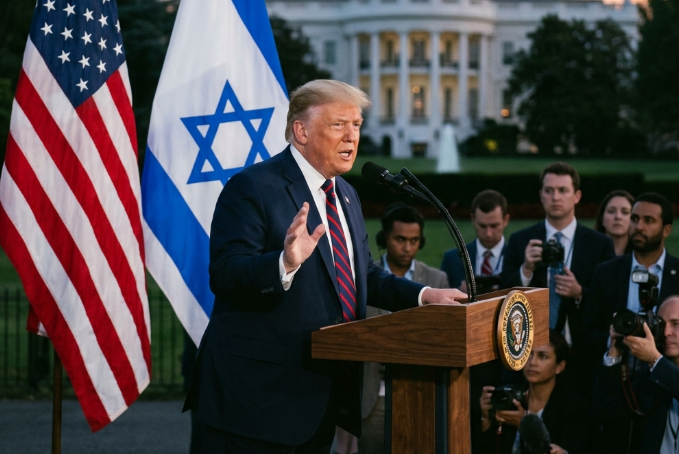

U.S. PRESIDENT Donald Trump announced Saturday that the United States and Israel have agreed to hold off on a new wave of heavy military strikes against Iran, provided a comprehensive deal to end the months-long conflict is reached “rapidly.”
The decision comes amid heightened global fears of regional escalation following reports that Washington and Tel Aviv were preparing joint attacks targeting Iranian energy infrastructure, including oil refineries and power facilities.
Trump stated that while American forces remain “locked and loaded,” he agreed to pause the planned offensive after receiving direct requests from Tehran and neighboring Middle Eastern nations.
According to reports, Saudi Crown Prince Mohammed bin Salman called Trump personally on Saturday to express concern over the strike plans and urge the administration to refrain from further military action.
Writing on his Truth Social platform, Trump outlined strict conditions for any final agreement, emphasizing that a deal must include the “Immediate, Complete and Total OPENING OF THE HORMUZ STRAIT, and an end to Iran’s nuclear threat.”
Trump added that Israel fully supports the commitment, urging all negotiating parties to finalize terms quickly.
The broader war began on February 28 when U.S. and Israeli forces launched initial strikes on Tehran.

Although a previous ceasefire attempted to resolve access through the Strait of Hormuz, that agreement collapsed.
Iran subsequently tightened control over the vital trade corridor—demanding transit fees and permission from passing vessels—which caused maritime traffic through the strait to drop sharply and pushed global oil prices higher.
Security across the Middle East remains exceptionally tense. In recent days, a drone strike set fire to a U.S.-owned gas vessel at an Egyptian port, and an unknown projectile struck a tanker off Oman’s coast on Saturday.
U.S. embassies across the region have warned citizens to remain vigilant against unforeseen escalation and be prepared to leave if necessary.
Despite the volatility, U.S. Secretary of State Marco Rubio noted that American operations have severely degraded Iran’s defense capabilities, leaving Tehran more inclined to negotiate.
However, with U.S. midterm elections approaching in three months, reaching a lasting resolution carries significant political and economic stakes.