

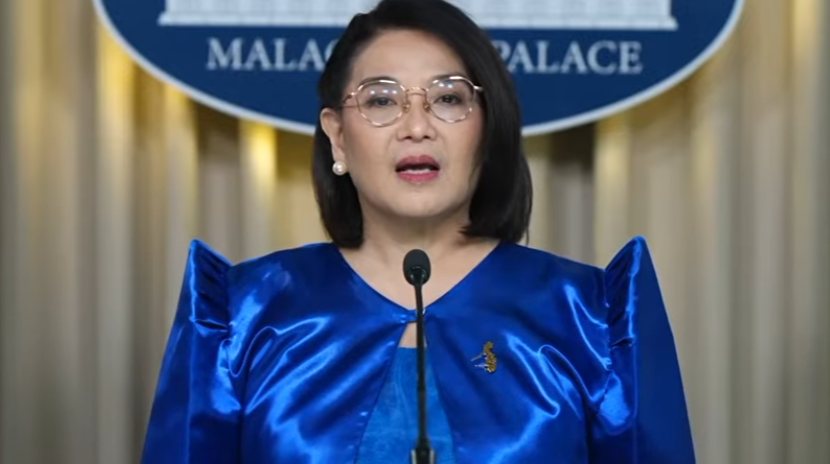


MALACAÑANG announced that the Office of the Solicitor General will file a motion for reconsideration with the Supreme Court following a ruling that declared certain provisions of the 2024, 2025, and 2026 national budgets unconstitutional.
Palace Press Officer Claire Castro maintained that the administration’s utilization of unprogrammed appropriations complied with existing laws, established budgeting procedures, and strict accountability guidelines.
“We are filing a motion for reconsideration through the Office of the Solicitor General because the administration knows no laws or constitutional provisions were violated. This administration simply complied with the legal processes stated by law,” Castro said during a press briefing.
The high court’s en banc decision, penned by Senior Associate Justice Marvic Leonen, struck down a ₱449.5-billion congressional increase in 2024 unprogrammed appropriations and a ₱17.99-billion hike in the 2025 Department of Public Works and Highways Special Road Fund.
The court ruled that both increases exceeded the executive’s proposed budgets.
Additionally, the tribunal invalidated two provisions governing 2026 unprogrammed funds due to insufficient spending safeguards and prohibited lump-sum allocations like the Strengthening Assistance for Government Infrastructure and Social Programs.
While the court clarified that unprogrammed appropriations are not inherently unconstitutional, it mandated that total revenue collections must exceed overall targets before standby funds can be tapped.
The Palace argued that this condition effectively alters a policy established by Congress in 2015, which permitted fund releases when revenues exceeded targets from at least one specified non-tax source.
Addressing potential legal liabilities, Castro asserted that the administration acted in good faith and that no officials would face administrative or criminal penalties for distributing funds to rightful beneficiaries.
“If it was given to the people who were meant to receive it, who should be held liable? No one, because everything the administration did was in accordance with law,” Castro stated, reaffirming the government’s commitment to complete financial transparency.


