



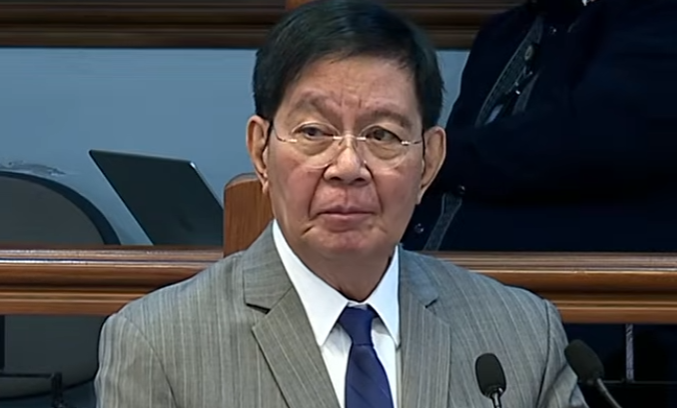


THE Supreme Court’s recent landmark ruling declaring portions of the 2024 and 2025 national budgets unconstitutional has arrived at a critical juncture, according to Senator Panfilo “Ping” M. Lacson.
Speaking on the heels of the High Tribunal’s decision, Lacson noted that the timing aligns perfectly with the Senate’s ongoing scrutiny of the House version of the 2027 General Appropriations Bill (GAB).
The 121-page Supreme Court ruling struck down key provisions of past budgets and restricted unprogrammed appropriations in the 2026 budget.
Crucially, the Court emphasized that Congress committed grave abuse of discretion by drastically inflating the Executive Branch’s recommended unprogrammed funds—raising them from ₱281.9 billion in the National Expenditure Program (NEP) to ₱731.4 billion in the enacted 2024 budget.
The decision explicitly reiterates that Congress is constitutionally prohibited from increasing the president’s total recommended appropriations.
Lacson, who was not a member of the Senate when the controversial 2024 and 2025 budgets were enacted, asserted that these fiscal packages have cemented a negative legacy.
He likened their unconstitutionality to the infamous Disbursement Acceleration Program (DAP) under the 2013 General Appropriations Act, which was also struck down by the judiciary.
Addressing the immediate legal and financial fallout, Lacson explained that funds remaining unspent from the unconstitutional provisions can no longer be disbursed.
However, amounts already spent will generally remain valid.
Meanwhile, the ruling provides strong legal backing as the Senate begins dissecting the House version of the 2027 budget.
Lacson previously warned of looming friction—colloquially referred to as “iyakan”—as the upper chamber evaluates sweeping budget cuts and realignments made by the House.
The Senate is expected to restore hundreds of billions of pesos, particularly targeting controversial alterations to Foreign-Assisted Projects (FAPs) and inflated allocations for flood control initiatives.
As lawmakers navigate the legislative process for the upcoming fiscal year, the High Court’s definitive stance on constitutional budget limits establishes a strict precedent, reinforcing checks and balances between the legislative and executive branches.