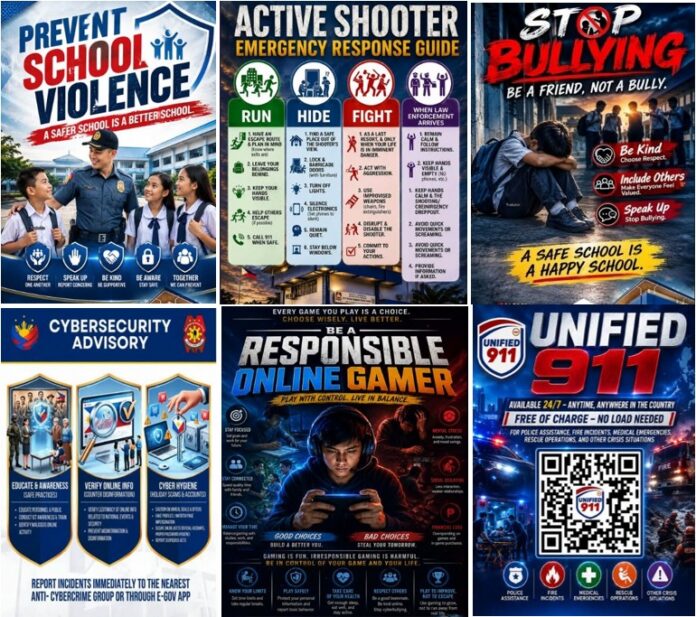


FOLLOWING the tragic shooting incident in Zamboanga, the Philippine National Police (PNP) has released a comprehensive unified safety guide for students.
The initiative aims to promote campus peace, prepare youth for active-shooter emergencies, prevent bullying, and cultivate responsible online behavior.
The nationwide safety campaign outlines practical protocols for students, parents, and educators across four major areas:
Preventing School Violence Police emphasized that keeping schools safe requires collective responsibility and peaceful conflict resolution.
- Cultivate Respect and Kindness: Treat fellow students with respect while avoiding insults, discrimination, and acts of intimidation.
- Zero Tolerance for Bullying: Reject all forms of physical, verbal, social, and online bullying.
- Peaceful Conflict Resolution: Resolve disagreements through open communication and seek intervention from teachers, parents, or school administrators.
- Proactive Reporting: Immediately notify school authorities or law enforcement regarding threats, suspicious behavior, or unauthorized weapons on campus.
- Adherence to Safety Protocols: Follow school discipline policies and maintain open communication between families, schools, and local police.
Active Shooter Emergency Response In the event of an active-shooter scenario, police urge the public to follow the life-saving “RUN – HIDE – REPORT” protocol:
- RUN: Immediately evacuate the danger area if a safe escape route is available.
- HIDE: If escape is impossible, lock or barricade yourself in a safe room, remain quiet, and stay away from windows and doors.
- REPORT: Once in a safe position, immediately call the 911 National Emergency Hotline to report the location, suspect descriptions, and casualty details.
- Upon Police Arrival: Stay calm, keep hands visible at all times, avoid sudden movements, and strictly follow police instructions.
Cybersecurity Preparedness With digital threats on the rise, students are reminded to practice essential digital hygiene.
- Secure Personal Data: Use strong, unique passwords and activate two-factor authentication on all personal accounts.
- Practice Digital Vigilance: Avoid clicking on unverified links or sharing sensitive personal information online.
- Report Cyber Threats: Immediately report suspicious digital activities or cybercrime to proper authorities.
Responsible Online Gaming Law enforcers also called on young people to practice healthy habits and sportsmanship in online spaces.
- Promote Good Sportsmanship: Respect fellow gamers, adhere to game rules, and refrain from harassment, cheating, or toxic language.
- Balance Gaming and Life: Manage screen time effectively to prioritize studies, family time, health, and adequate sleep.
Guard Financial and Personal Info: Exercise caution with in-game purchases and avoid sharing addresses or passwords with strangers online.